Propulsion: Examine the Thrust Idea
Why does the phrase "rocket bicycle" endure across a century of popular mechanics magazines, yet fail every practical transportation metric? A calm look at Froude propulsive efficiency, kinetic energy waste, and road-tyre limits separates genuine engineering insight from reckless spectacle.
The Tyranny of Froude Propulsive Efficiency at 10 m/s
Momentum conservation (F = ṁ(ve − v0)) dictates that you can generate 50 Newtons of forward thrust either by throwing a tiny mass of gas backward very fast, or by pushing a colossal mass backward infinitesimally slowly. Kinetic energy, however, scales with velocity squared (½mv²).
When a bicycle chain turns a rear tyre against the Earth (mass ≈ 5.97 × 1024 kg), virtually zero kinetic energy is wasted accelerating the planet backward; mechanical transmission efficiency reaches 95% to 98%. By contrast, Froude propulsive efficiency for a fluid jet moving at exhaust speed ve on a vehicle travelling at v0 = 10 m/s (36 km/h) equals 2 / (1 + ve/v0). If a hot gas or high-pressure air jet exits a nozzle at 400 m/s while the bike moves at 10 m/s, over 95% of the energy goes straight into heating and violently churning the wake—plus deafening 120+ dB acoustic shock.
Compare storing 360 Wh (1.3 MJ) in a 2.4 kg lithium battery driving a rear wheel versus storing compressed air in a carbon-wrapped 300-bar scuba cylinder.
Isothermal/adiabatic expansion losses and nozzle mismatch leave compressed air with under 8% of the usable road range per kilogram of a standard e-bike battery, alongside severe pressure-vessel rupture risk.
Where Energy Goes Across Propulsion Concepts
This comparison treats non-wheel reaction systems strictly as physics case studies. On public roads and home workshops, combustion rockets, peroxide thrusters, unshielded propellers, and uncertified high-pressure vessels introduce lethal thermal, shrapnel, acoustic, and legal hazards; we never publish build recipes for pyrotechnic or reaction-thrust attachments.
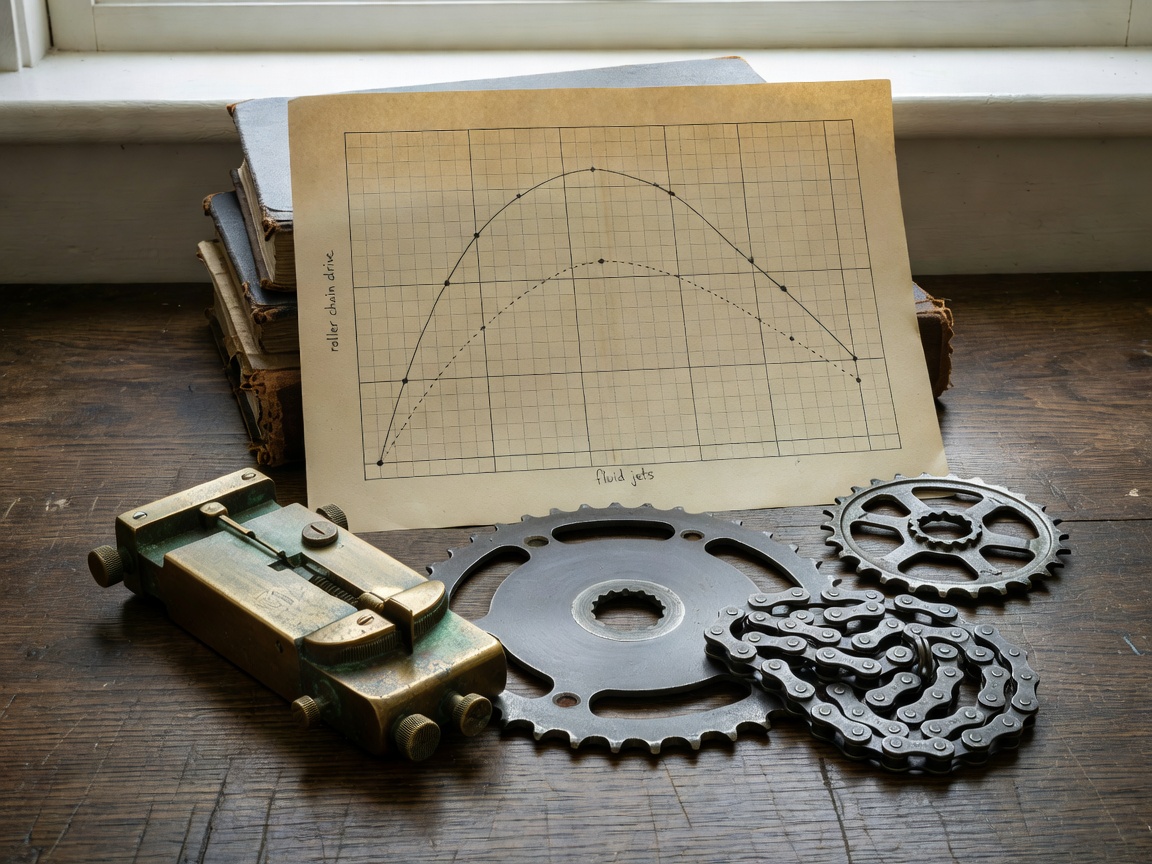
| Concept | Propulsive Efficiency at 30 km/h | Acoustic Output | Primary Physical & Safety Limitation |
|---|---|---|---|
| Human Pedal + Roller Chain | 96% – 98% (drivetrain) | < 50 dBA | Metabolic ceiling (~150–300 W sustained) |
| Legal E-Assist Wheel Drive | 78% – 85% (battery-to-road) | 52 – 60 dBA | Battery mass & statutory 25 km/h assist cut-off |
| Shrouded Electric Ducted Fan (Study Only) | 18% – 28% at low road speed | 88 – 102 dBA | High current draw, blade ingestion hazard, & severe wake loss |
| Compressed Gas / Cold Jet (Study Only) | 4% – 12% | 105+ dBA | Adiabatic freezing, low energy density, & pressure-vessel burst hazard |
| Historical Rocket / Peroxide Stunts (Closed Runway History) | < 3% at cycling speeds | 125+ dBA | Extreme fire/explosion hazard; speeds vastly exceed bicycle tyre & steering stability |
What Closed-Course Stunts Taught Engineers About Stability
From Gustav Mesmer’s poetic winged bicycle sketches to closed-runway speed exhibitions such as François Gissy’s specialized hydraulic-damped test frames, historical records prove a sobering structural lesson: standard bicycle tyres, wheel bearings, and fork geometries are engineered for 30 to 70 km/h, not runway speeds. Above ~85 km/h, ordinary clincher tyres risk standing-wave delamination, and slight imbalances excite violent steering shimmy (speed wobble).
Real aerospace engineering applied to cycling looks very different from strapping a nozzle onto a luggage rack. It looks like Graeme Obree calculating bearing preload, human-powered aircraft teams such as MIT’s Daedalus optimizing ultra-low-drag laminar airfoils, and commuter builders crafting quiet, weather-protected fairings that halve energy demand every morning.
Workshop Safety Red Lines (Non-Negotiable)
- Zero pyrotechnics or combustion propellants: Never mount solid motors, liquid oxidizers, pulsejets, or gas turbines onto a bicycle chassis.
- Zero homemade pressure vessels: Never pressurize PVC pipe, brazed frame tubes, or repurposed extinguishers with compressed air or CO₂; fragmented PVC cannot even be detected easily on standard X-rays.
- Speed-rated rolling stock: Always stay within the tyre manufacturer’s load and speed design envelope and verify frame dynamic stability incrementally.
- Channel curiosity into aerodynamics & instrumentation: Cutting 40 watts of aerodynamic drag delivers silent, free "thrust" on every ride without burning a gramme of fuel.